Managing Kitchen Assets Wisely
To maximize the financial return on your home baking, investing in durable, high-quality tools is a smart move. Selecting heavy-duty baking sheets, reliable kitchen scales, and professional-grade silicone liners helps minimize ingredient waste due to uneven hot spots or sticking. Treating your kitchen as a managed space protects your culinary assets and yields consistently excellent results.
Practical Tips for Working with Yeast Dough
To ensure your baking projects yield flawless results every time you step into the kitchen, implement these essential rules of thumb:
- Weigh Your Ingredients Instead of Scooping: Volume measurements using measuring cups can vary significantly based on how packed the flour is; a digital scale provides the exact accuracy required for consistent dough.
- The Windowpane Test for Gluten Development: To check if your dough has been kneaded sufficiently, stretch a small piece between your fingers; if it stretches thin enough to let light pass through without tearing, it is ready.
- Create a Warm Proofing Sanctuary: If your kitchen runs cold, place your covered dough inside an unlit oven alongside a large mug of boiling water to create a perfect, humid proofing box.
- Never Skip the Second Rise: Allowing your shaped rolls or donuts to proof a second time right before baking or frying is the ultimate key to achieving an airy, feather-light interior.
Interesting Facts About Bread Science
- The Ancient Art of Leavening: Archaeologists have uncovered evidence proving that ancient Egyptian civilizations were utilizing wild yeast strains to bake structured flatbreads as early as 4000 BCE.
- The Magic of Salt Control: Salt does more than season bread; it actively regulates the speed of yeast fermentation and strengthens the protein bonds within the gluten structure.
- Why Bread Stales: Contrary to popular belief, bread going stale isn’t just a loss of moisture; it is a chemical process called starch retrogradation, where starch molecules crystallize back into their original structure.
Conclusion
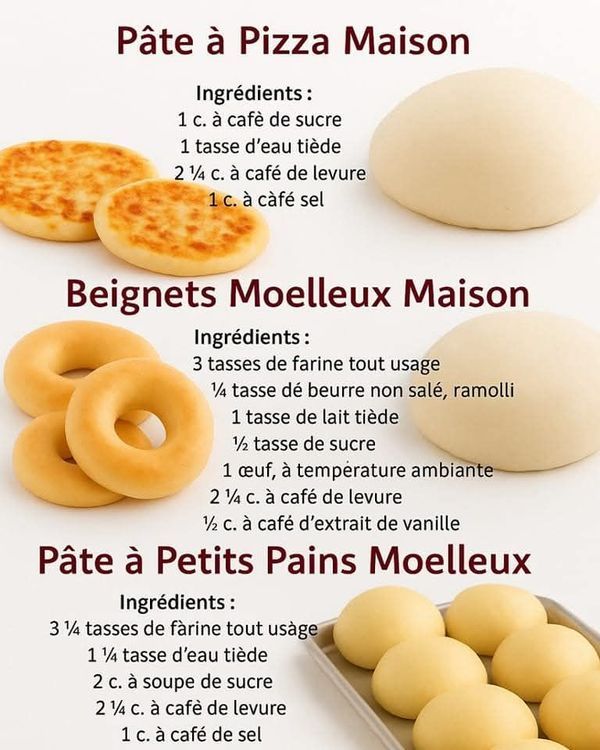
Mastering foundational dough styles is an incredibly rewarding milestone for any home cook. Whether you are prepping a savory pizza crust, shaping golden dinner rolls, or frying up a batch of fluffy donuts, understanding the science of fermentation takes the guesswork out of the kitchen. By focusing on temperature precision, managing your ingredients carefully, and respecting the proofing process, you can effortlessly fill your home with beautiful, artisanal baked goods that outperform any commercial storefront.
FAQ Section
Can I swap all-purpose flour for bread flour in these recipes?
Yes. Bread flour possesses a higher protein content, which creates stronger gluten networks. Using it in pizza dough will result in a chewier, crispier crust, while using it in rolls will give them a bit more structure.
What is the quickest way to tell if my yeast is still alive?
Dissolve a teaspoon of yeast and a pinch of sugar into a quarter cup of warm water. If the mixture becomes bubbly, frothy, and highly aromatic within 5 to 10 minutes, your yeast is active and safe to use.
Why did my dinner rolls turn out dense and heavy?
Dense rolls are typically caused by killing the yeast with overly hot liquid, under-kneading the dough (which prevents gluten structure from trapping gas), or not allowing the shaped rolls to rise long enough during the second proofing phase.