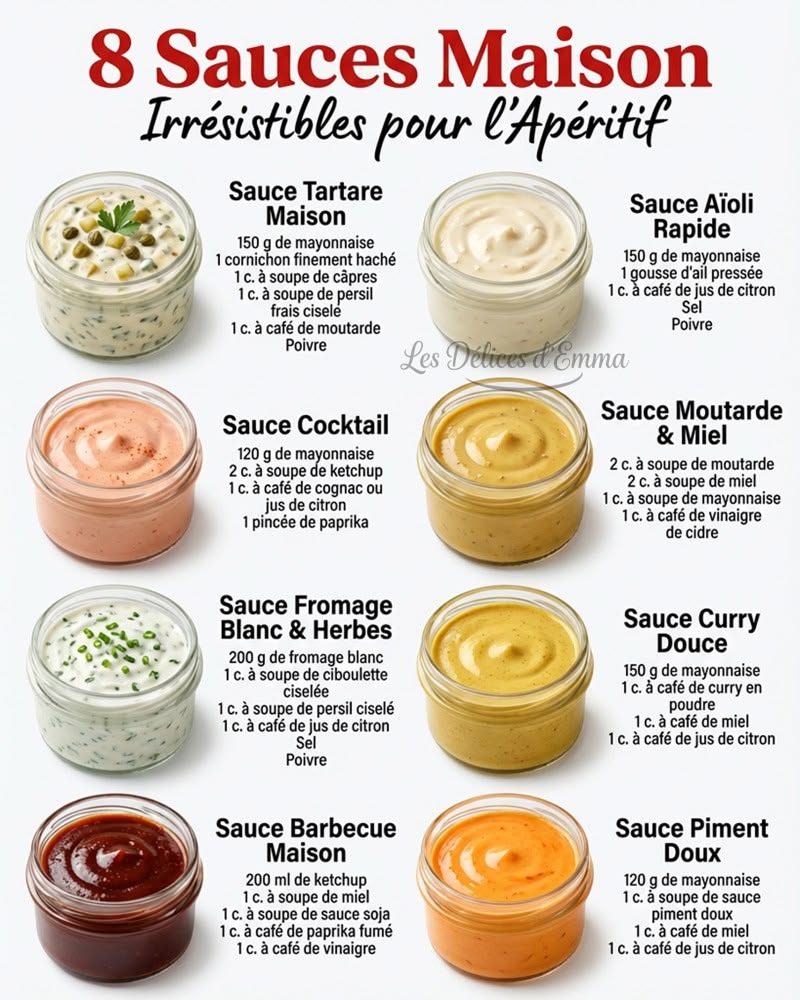
Nothing elevates a casual gathering quite like a beautifully curated apéritif board. While standard chips, crackers, and raw vegetables provide a great texture crunch, the true soul of a grazing platter lies entirely within its dips. Moving away from highly processed, store-bought condiments in favor of fresh, scratch-made variations transforms your hosting game from ordinary to artisanal. With just a few simple recipes, you can showcase an irresistible spread of homemade favorites like Sauce Tartare Maison, Sauce Aïoli Rapide, Sauce Cocktail, Sauce Moutarde & Miel, Sauce Fromage Blanc & Herbes, Sauce Curry Douce, Sauce Barbecue Maison, and Sauce Piment Doux.
Understanding how to balance the culinary elements of acidity, fat, and sweetness is the ultimate secret to flawless saucemaking. Whether you are prepping a rich, garlic-infused emulsion or a refreshing, herb-packed yogurt blend, a few professional principles can guarantee culinary success every single time. In this comprehensive guide, we unpack the kitchen science behind these eight classic formulas, explore the structural balance of a perfect dip, and break down how to manage your culinary hobbies efficiently.
1. The Anatomy of Flavor: Balancing Acid, Emulsion, and Fat
Most classic dip formulas rely on a rich, stable emulsion—primarily utilizing mayonnaise or fromage blanc as a smooth flavor vehicle. To keep these rich bases from tasting heavy or monotonous on the palate, they must be balanced with targeted flavor agents.
The Role of Sharp Acidic Catalysts
In popular recipes like a quick aioli, a herbed yogurt dip, or a mild curry sauce, fresh lemon juice (jus de citron) or apple cider vinegar (vinaigre de cider) are essential additions. Acid physically breaks through the dense coating of fat molecules on the tongue, brightening the entire flavor profile and making each bite taste clean and vibrant.
Texture Inclusions for Complexity
A great dip should engage more than just your tastebuds; it requires structural contrast. In formulas like a classic homemade tartar sauce, the inclusion of finely minced cornichons and whole capers (câpres) adds a brilliant pop of briny crunch. This contrast keeps the palate interested and prevents the sauce from feeling like a simple, flat spread.