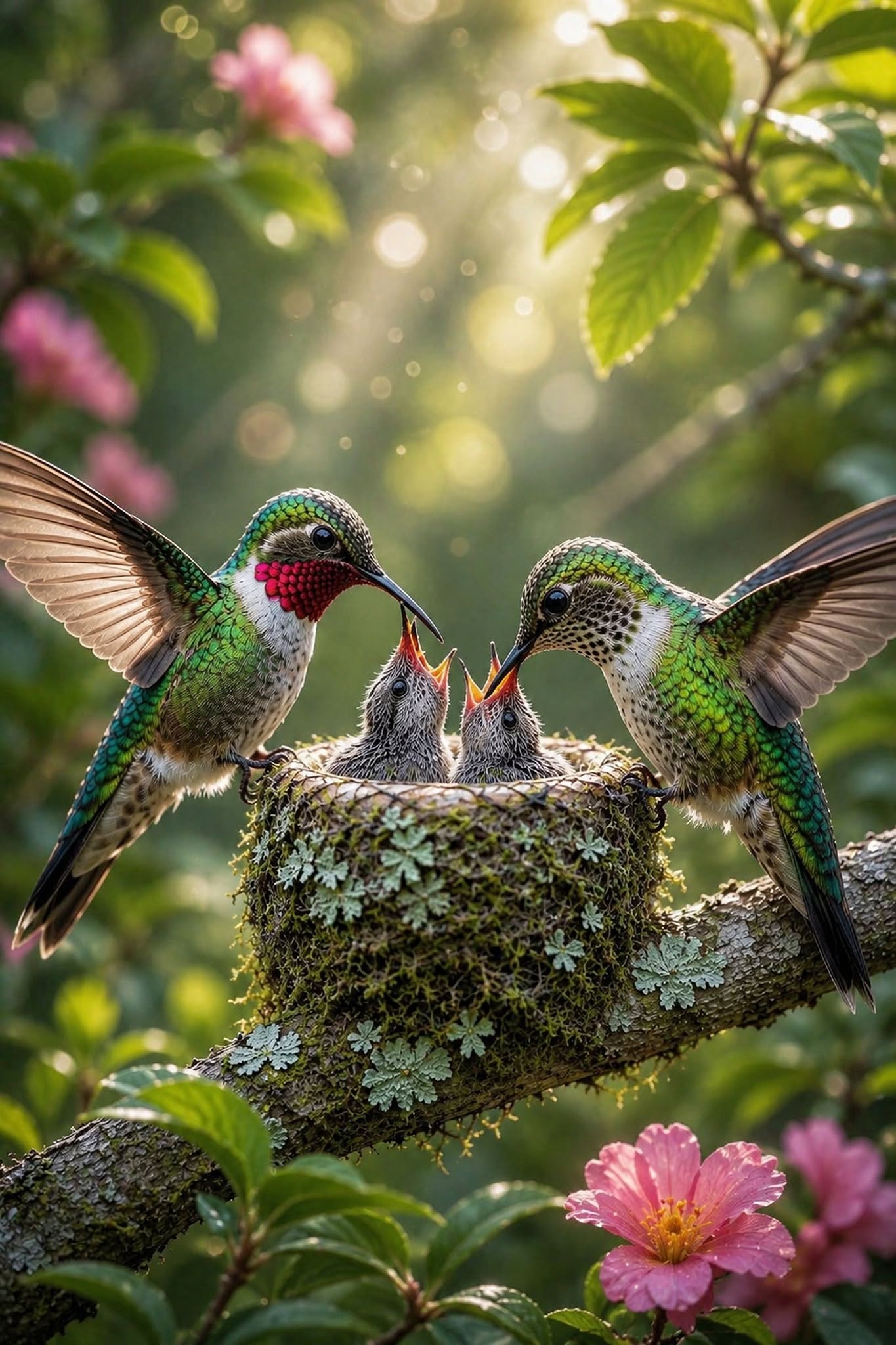
Few sights in the natural world capture the imagination quite like a pair of hummingbirds tending to an exquisite, moss-covered nest nestled among vibrant spring blossoms. In viral wildlife photography like 728315310_122184793694603166_8558969166240531990_n.jpg, we are treated to a picture-perfect scene: two dazzling, iridescent adult hummingbirds hovering over a tiny cup-shaped nest, carefully dipping their long, slender bills down to feed a pair of eagerly awaiting chicks. It is an image that radiates warmth, cooperative parenting, and the serene perfection of the wilderness.
However, for experienced ornithologists and dedicated backyard birdwatchers, this exact image triggers an immediate question. While it beautifully represents the emotional ideal of family nature photography, it directly clashes with the actual, cutthroat biology of these tiny avian wonders. The hidden reality of hummingbird nesting habits, mating behaviors, and territory defense is vastly different from what classic artistic portrayals suggest. In this comprehensive guide, we look into the fascinating science of hummingbird parenting, separate myth from reality, and explore how you can safeguard these incredible creatures through smart environmental stewardship.
1. The Single Mother of the Avian World
The most striking divergence between viral art like 728315310_122184793694603166_8558969166240531990_n.jpg and real-world biology lies in the parental dynamic. In the vast majority of bird species, both parents work as a team to construct a home, incubate eggs, and forage for insects. In the hummingbird world, however, the male is entirely absent from the child-rearing process.
The Real Role of the Male Hummingbird
Male hummingbirds are famously striking, boasting brilliant, iridescent throat feathers called gorgets. Their sole biological role in the nesting season is courtship. Once mating is complete, the male immediately departs to defend his personal feeding territory or search for other mates. He plays absolutely no part in scouting a location, gathering spiderwebs for construction, incubating the eggs, or feeding the newly hatched chicks.