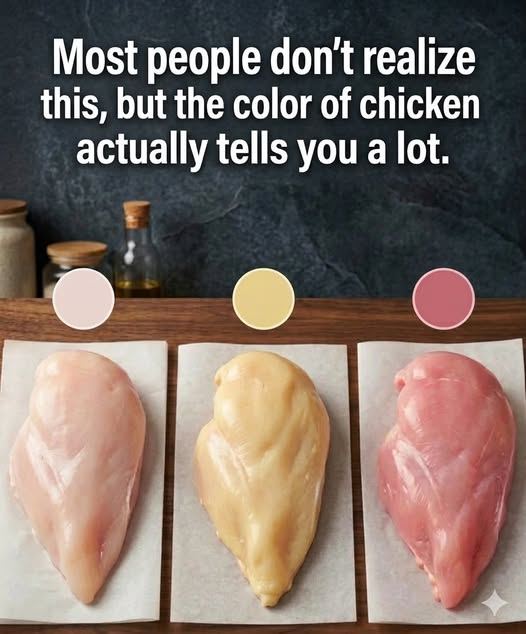
What Chicken Color Really Means: Pale vs Yellow Meat Explained
When you’re standing in front of the meat section, it’s hard not to notice the difference. Some chicken looks pale, almost pinkish-white, while others have a deeper yellow tone that immediately stands out. It’s a small detail, but one that often leads people to assume one must be fresher, healthier, or simply better than the other.
In reality, color alone doesn’t tell you what you think it does.
The appearance of chicken is shaped by a combination of factors—mainly diet, environment, and how the bird was raised. Once you understand those, the difference between pale and yellow meat becomes much less mysterious and much more practical.
Pale chicken is most commonly associated with large-scale farming systems. These birds are typically raised indoors, in controlled environments, with carefully formulated feed designed for consistent growth. This approach keeps production stable and costs lower, which is why this type of chicken is the most widely available. The result is meat that is lighter in color and usually milder in flavor. It’s not inferior—it’s simply produced with efficiency as the priority.
On the other hand, yellow chicken often gets its color from what the bird eats. Diets rich in natural pigments—like corn, grass, and certain plants—can tint the skin and fat, giving that warmer, golden appearance. This is why chickens with access to outdoor environments, where they can forage more freely, sometimes develop that distinct color.
But this is where it’s important to stay grounded: yellow doesn’t automatically mean better.
Some producers enhance color by adding pigments to feed, creating that same visual effect without changing much else. So while color can reflect diet, it can also be influenced deliberately. That’s why relying only on appearance can be misleading.
If you’re trying to understand how a chicken was raised, labels are far more useful than color. Terms like “free-range,” “organic,” or “pasture-raised” give a clearer picture of the bird’s living conditions and diet. Even then, it’s worth knowing that these labels have specific definitions and standards, so taking a moment to understand them can make a real difference in how you choose.
Beyond how the chicken looks, freshness matters far more. Good chicken should feel firm to the touch and have a clean, neutral smell. Any strong or unpleasant odor is a clearer warning sign than any variation in color.
There’s also the question of preference. Chickens that move more and eat a varied diet often develop slightly firmer meat and deeper flavor, but not everyone is looking for that. Some people prefer the milder taste and softer texture of conventionally raised chicken. Others are willing to pay more for differences in farming practices or taste. Neither choice is wrong—it depends on what matters to you.
In the end, color is just one visible detail in a much larger picture. It can hint at how a chicken was raised, but it doesn’t define quality on its own. Paying attention to freshness, understanding labels, and knowing your own priorities will give you a much more reliable way to choose.
Because when it comes to food, the best decisions are rarely made at a glance—they come from understanding what’s behind what you see